
First Trimester Aneuploidy ScreeningNuchal Translucency & Trisomy 21 (ARDMS OB/GYN)
First Trimester Aneuploidy Screening
Master first trimester aneuploidy screening techniques for detecting Trisomy 21, 18, and 13. Learn to accurately measure nuchal translucency and identify markers like an absent nasal bone between 11 and 14 weeks. ARDMS, ARRT, and CCI registry exam preparation.
Lesson Overview & Exam Focus
Master first trimester aneuploidy screening techniques for detecting Trisomy 21, 18, and 13. Learn to accurately measure nuchal translucency and identify markers like an absent nasal bone between 11 and 14 weeks. ARDMS, ARRT, and CCI registry exam preparation.
Key Exam Takeaways & Study Notes
- Master first trimester aneuploidy screening techniques for detecting Trisomy 21, 18, and 13.
- Learn to accurately measure nuchal translucency and identify markers like an absent nasal bone between 11 and 14 weeks.
- Aneuploidy screening assesses risk for Trisomy 21, 18, and 13.
- High-yield ARDMS OB/GYN registry concepts in First Trimester Aneuploidy Screening: nuchal translucency, Trisomy 21, Down syndrome, Edwards syndrome, Patau syndrome, aneuploidy screening.
First Trimester Aneuploidy Screening: Registry Exam FAQ
What does First Trimester Aneuploidy Screening cover on the ARDMS OB/GYN registry exam?
Master first trimester aneuploidy screening techniques for detecting Trisomy 21, 18, and 13. Learn to accurately measure nuchal translucency and identify markers like an absent nasal bone between 11 and 14 weeks.
Which high-yield ARDMS OB/GYN topics and keywords are tested in First Trimester Aneuploidy Screening?
Key registry concepts tested in this lesson include nuchal translucency, Trisomy 21, Down syndrome, Edwards syndrome, Patau syndrome, aneuploidy screening. Knowing how these concepts appear on clinical images and physics questions helps you avoid common ARDMS OB/GYN exam distractors.
Key Registry Concepts in This Lesson
Full Glossary →Nuchal translucency
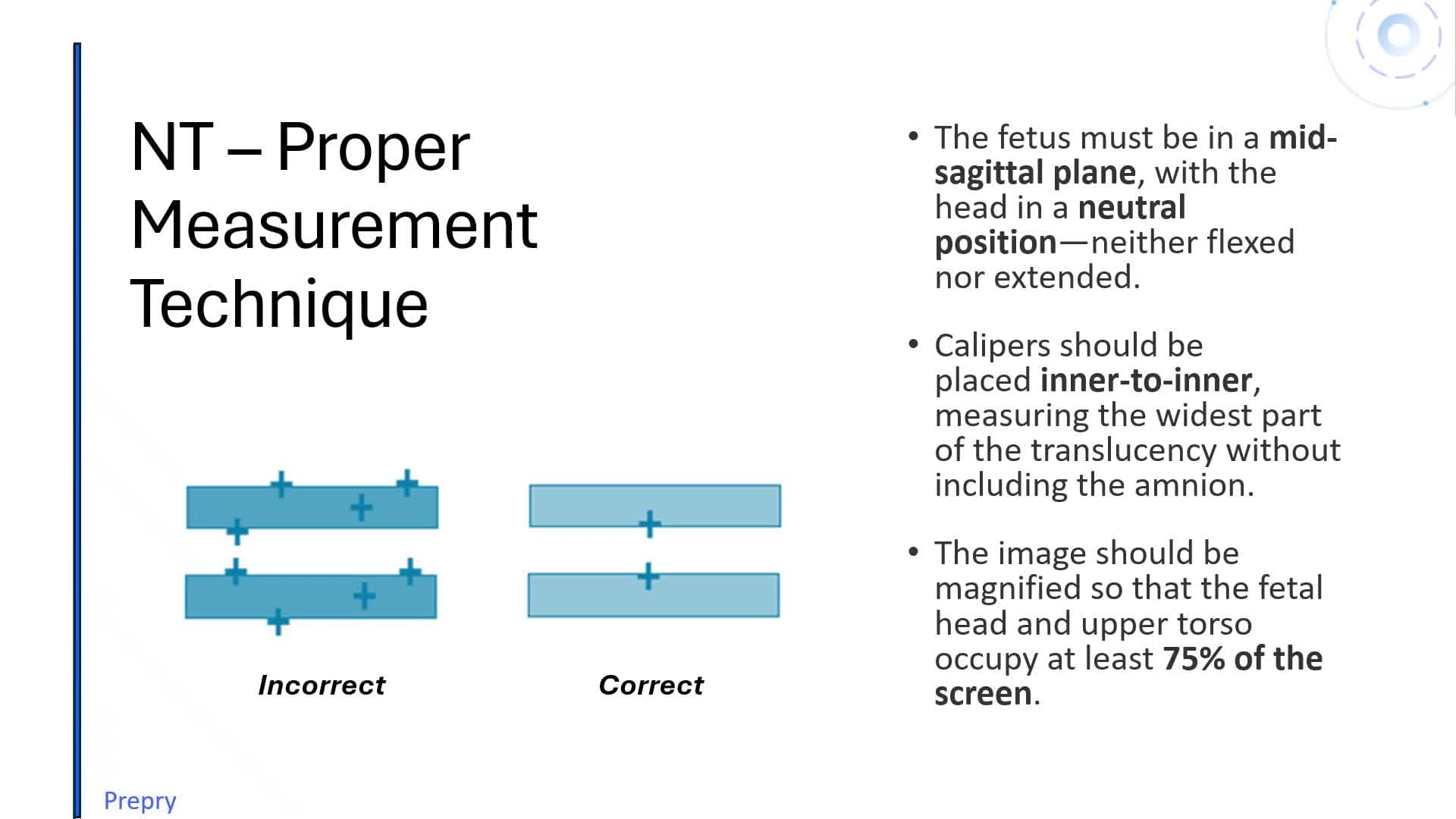
Nuchal translucency is the fluid-filled space at the back of the fetal neck, measured in the first trimester between 11 and 14 weeks gestation, when the crown-rump length falls between 45 and 84 mm, as part of aneuploidy screening. Measurement requires a strict midsagittal view with calipers on the inner borders of the nuchal line. Anything over 3 mm counts as abnormal, and at 3.5 mm or more the fetus is referred for echocardiography.
On the exam: The precise gestational age and crown-rump length window for a valid measurement are heavily tested technique details, along with the referral threshold for fetal echocardiography.
Transcript
17:35 lessonAneuploidy screening assesses risk for Trisomy 21, 18, and 13. Key sonographic markers include increased nuchal translucency, absent nasal bone, and early detection of cystic hygroma.
Ready to Test Your Knowledge?
Practice with hundreds of questions designed to help you pass the OB/GYN Exam.
Get Full Access
Unlock all OB/GYN Exam Prep video lessons plus practice questions.
- All video lessons in this course
- 10,000+ practice questions
- Pass guarantee included
25 free questions per exam plus the Question of the Day. No credit card required.