
The First ARRT Exam: 20 Essay Questions and 10 Radiographs
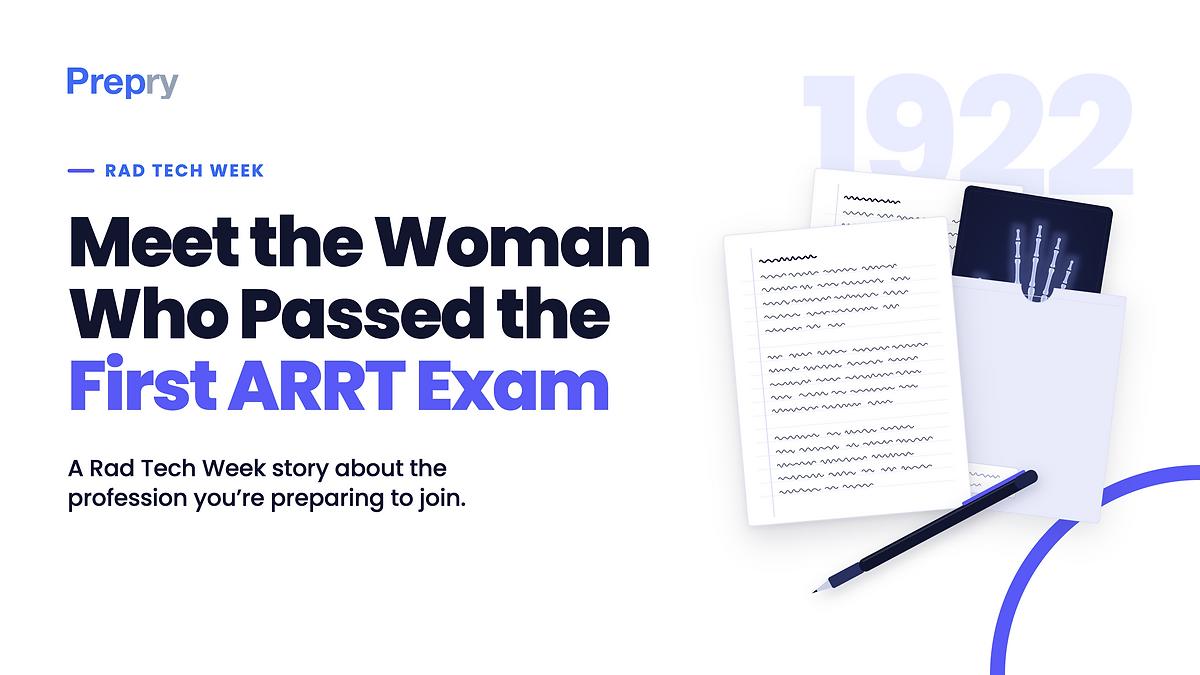
Twenty essay questions. Ten required radiographs, spanning sinus to knee.
In 1922, that was the examination Sister Mary Beatrice Merrigan completed for the Registry now known as the American Registry of Radiologic Technologists.
She submitted her written answers and radiographic films. A few weeks later, she received her results and became ARRT’s first Registered Technologist.
ARRT’s history records the milestone. For students preparing for the registry today, it offers a glimpse of how the profession began assessing the knowledge and practical ability behind the images.
What the first examination required
Merrigan’s examination looked very different from today’s computer-based test.
She had to answer questions in essay form and submit a prescribed set of radiographs. Her assessment brought together written knowledge and examples of her radiographic work.
The format is a reminder of how much goes into becoming a technologist. Producing an image requires knowledge of anatomy, equipment, positioning, and the patient in front of you. Learning to explain your decisions helps connect those areas.
For a student working through practice questions today, that’s a useful habit to build: after choosing an answer, explain the reasoning in your own words.
Today’s credential involves three requirements
ARRT’s primary eligibility pathway includes education, ethics, and examination.
For the education requirement, candidates must earn an associate degree or higher and complete an ARRT-approved educational program in the discipline they’re pursuing. They must also meet the ethics requirement and pass the examination. You can review the details on ARRT’s primary requirements page.
Passing the exam is an important milestone within that preparation. Your coursework and clinical education also help you develop the knowledge, judgment, and patient care skills the profession requires.
Think of a clinical instructor asking why you chose a particular positioning adjustment. Explaining your reasoning helps you recognize what you understand and where you still need guidance. You can bring that same approach to your study sessions.
A story to remember during Rad Tech Week
ASRT launched National Radiologic Technology Week® in 1979, decades after Merrigan earned her credential.
In 2026, the celebration runs November 8–14, with the theme “Radiating Love.” The week honors the contributions of medical imaging and radiation therapy professionals to patient care and safety. Visit ASRT’s official event page for more about the celebration.
Merrigan’s examination is one chapter in that history. The technologists and instructors helping students prepare today are part of its continuation.
A conversation to have this week
Ask a technologist or clinical instructor:
“What part of your training do you still rely on every day?”
Then ask what helped them learn it.
Their answer might give you a practical study idea, a different way to approach a difficult concept, or a better understanding of something you’ve encountered in clinicals.
If you share their answer in class or on social media, ask permission and keep their explanation in their own words.
More than a century after Merrigan submitted her essays and radiographs, students are still learning from the people who came before them.
This National Radiologic Technology Week, all of us at Prepry celebrate the professionals doing the work, the educators sharing their knowledge, and the students preparing to join them.

Prepry
More from the Blog
Keep reading with these related articles
Related Exam Resources
Prepare for your certification with Prepry

