
Biliary System and Pancreas - Part 1: Biliary SystemGallbladder & Cholelithiasis (ARDMS Abdomen)
Biliary System and Pancreas - Part 1: Biliary System
Explore biliary system anatomy and sonographic techniques for evaluating the gallbladder and peritoneal cavity. Master the identification of cholelithiasis, cholecystitis, and proper gallbladder wall measurement protocols. ARDMS, ARRT, and CCI registry exam preparation.
Lesson Overview & Exam Focus
Explore biliary system anatomy and sonographic techniques for evaluating the gallbladder and peritoneal cavity. Master the identification of cholelithiasis, cholecystitis, and proper gallbladder wall measurement protocols. ARDMS, ARRT, and CCI registry exam preparation.
Key Exam Takeaways & Study Notes
- Explore biliary system anatomy and sonographic techniques for evaluating the gallbladder and peritoneal cavity.
- Master the identification of cholelithiasis, cholecystitis, and proper gallbladder wall measurement protocols.
- Ultrasound assessment requires imaging in supine and left lateral decubitus positions to evaluate stone mobility.
- High-yield ARDMS Abdomen registry concepts in Biliary System and Pancreas - Part 1: Biliary System: biliary system, gallbladder ultrasound, cholelithiasis, cholecystitis, gallbladder wall thickening, left lateral decubitus.
Biliary System and Pancreas - Part 1: Biliary System: Registry Exam FAQ
What does Biliary System and Pancreas - Part 1: Biliary System cover on the ARDMS Abdomen registry exam?
Explore biliary system anatomy and sonographic techniques for evaluating the gallbladder and peritoneal cavity. Master the identification of cholelithiasis, cholecystitis, and proper gallbladder wall measurement protocols.
Which high-yield ARDMS Abdomen topics and keywords are tested in Biliary System and Pancreas - Part 1: Biliary System?
Key registry concepts tested in this lesson include biliary system, gallbladder ultrasound, cholelithiasis, cholecystitis, gallbladder wall thickening, left lateral decubitus. Knowing how these concepts appear on clinical images and physics questions helps you avoid common ARDMS Abdomen exam distractors.
Key Registry Concepts in This Lesson
Full Glossary →Cholelithiasis
Cholelithiasis is the presence of gallstones within the gallbladder, the most common cause of biliary disease. On ultrasound, stones typically appear as highly reflective foci that cast a posterior acoustic shadow and roll with gravity when the patient repositions. A gallbladder packed with stones gives the wall-echo-shadow sign. Gallbladder sludge is also mobile and gravity-dependent but does not shadow. A twinkling artifact can appear behind small stones on color Doppler, but it is not itself diagnostic criteria for a stone.
On the exam: Exams test the shadowing and mobility that separate a stone from sludge, and that twinkling artifact supports but does not confirm the diagnosis.
Transcript
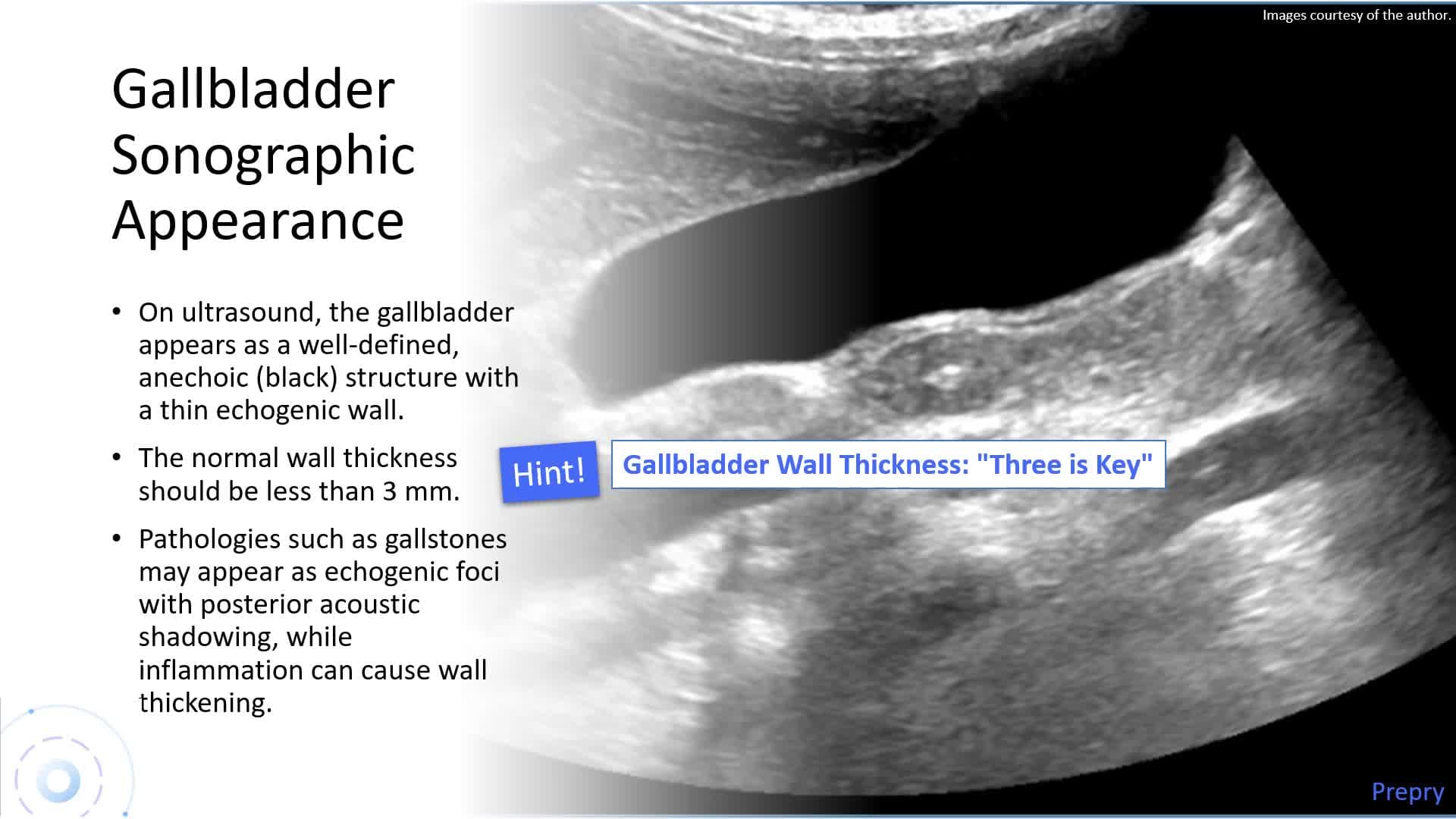
13:31 lessonUltrasound assessment requires imaging in supine and left lateral decubitus positions to evaluate stone mobility. The anterior gallbladder wall should measure three millimeters or less.
Ready to Test Your Knowledge?
Practice with hundreds of questions designed to help you pass the Abdomen Exam.
Get Full Access
Unlock all Abdomen Exam Prep video lessons plus practice questions.
- All video lessons in this course
- 10,000+ practice questions
- Pass guarantee included
25 free questions per exam plus the Question of the Day. No credit card required.