
Fluid Dynamics - Venous FlowVenous Hemodynamics & Venous Capacitance (ARDMS RVT)
Fluid Dynamics - Venous Flow
Explore venous hemodynamics, including venous capacitance and the relationship between vein shape and resistance. Understand how hydrostatic pressure and transmural pressure influence blood volume and the development of edema. ARDMS, ARRT, and CCI registry exam preparation.
Lesson Overview & Exam Focus
Explore venous hemodynamics, including venous capacitance and the relationship between vein shape and resistance. Understand how hydrostatic pressure and transmural pressure influence blood volume and the development of edema. ARDMS, ARRT, and CCI registry exam preparation.
Key Exam Takeaways & Study Notes
- Explore venous hemodynamics, including venous capacitance and the relationship between vein shape and resistance.
- Understand how hydrostatic pressure and transmural pressure influence blood volume and the development of edema.
- Venous capacitance allows veins to hold two-thirds of total blood volume, acting as a reservoir.
- High-yield ARDMS RVT registry concepts in Fluid Dynamics - Venous Flow: venous hemodynamics, venous capacitance, hydrostatic pressure, transmural pressure, calf muscle pump, deep vein thrombosis.
Fluid Dynamics - Venous Flow: Registry Exam FAQ
What does Fluid Dynamics - Venous Flow cover on the ARDMS RVT registry exam?
Explore venous hemodynamics, including venous capacitance and the relationship between vein shape and resistance. Understand how hydrostatic pressure and transmural pressure influence blood volume and the development of edema.
Which high-yield ARDMS RVT topics and keywords are tested in Fluid Dynamics - Venous Flow?
Key registry concepts tested in this lesson include venous hemodynamics, venous capacitance, hydrostatic pressure, transmural pressure, calf muscle pump, deep vein thrombosis. Knowing how these concepts appear on clinical images and physics questions helps you avoid common ARDMS RVT exam distractors.
Key Registry Concepts in This Lesson
Full Glossary →Deep vein thrombosis
Deep vein thrombosis is a blood clot within a deep vein, most often in the lower extremity, that can embolize to the lungs if untreated. Virchow's triad describes the contributing factors, of which venous stasis is the predominant cause, with clots typically forming around the valve leaflets. The primary diagnostic criterion is loss of vein compressibility with transducer pressure. Severe iliofemoral DVT with compromised arterial inflow, called phlegmasia cerulea dolens, threatens the limb.
On the exam: Noncompressibility is the single most tested diagnostic criterion for DVT, and phlegmasia cerulea dolens is tested as its limb-threatening complication.
Calf muscle pump
The calf muscle pump is the mechanism by which contraction of the calf muscles during walking compresses the deep veins and propels venous blood back toward the heart. During relaxation, falling pressure in the deep veins draws blood in from the superficial veins through the perforators, and competent valves prevent backflow. Dorsiflexion of the ankle activates the distal calf, or piston, pump. Failure of this system contributes to venous stasis and chronic venous insufficiency.
On the exam: Understanding the calf muscle pump explains why immobility raises DVT risk and why upper extremity DVT is less common, a physiology question on the vascular exam.
Transcript
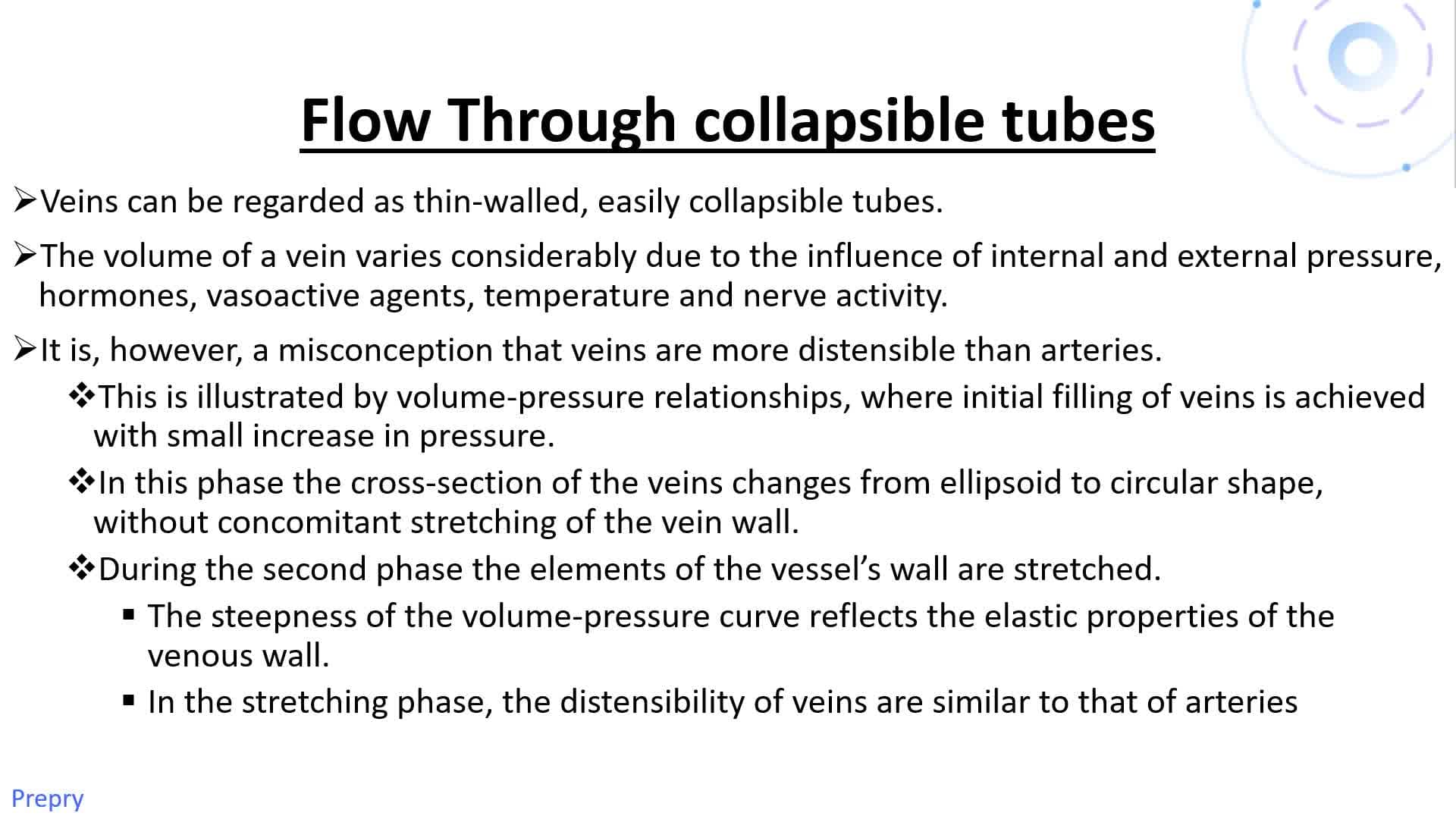
18:02 lessonVenous capacitance allows veins to hold two-thirds of total blood volume, acting as a reservoir. Transmural pressure determines vein shape, where high pressure distends the vessel and low pressure leads to a collapsed state.
Ready to Test Your Knowledge?
Practice with hundreds of questions designed to help you pass the Vascular Exam.
Get Full Access
Unlock all Vascular Exam Prep video lessons plus practice questions.
- All video lessons in this course
- 10,000+ practice questions
- Pass guarantee included
25 free questions per exam plus the Question of the Day. No credit card required.